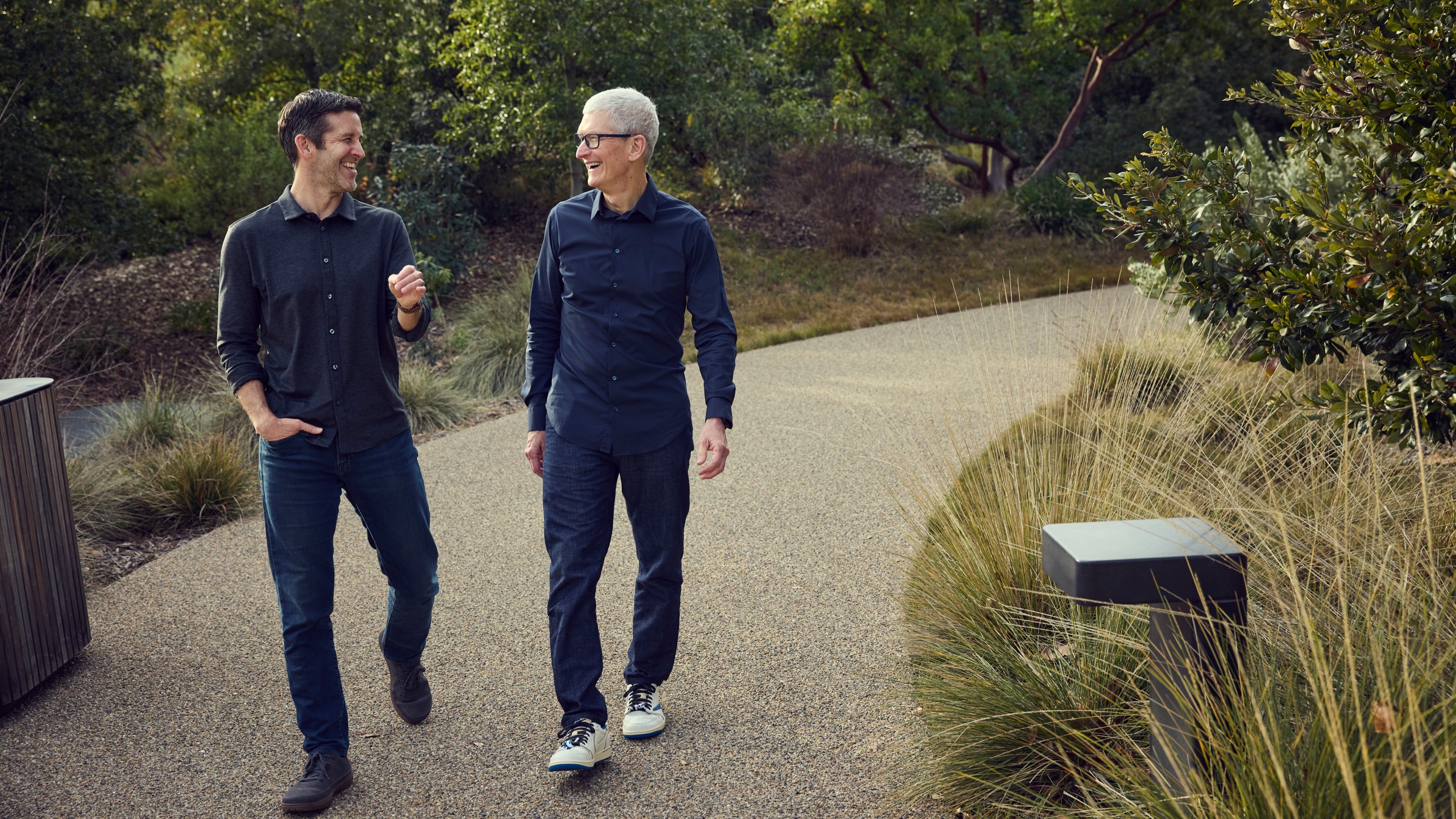
There are moments in the life of a company when time does not simply pass, it turns. Quietly, almost imperceptibly, a chapter closes and another begins. Not with spectacle, but with intent.
This is one of those moments for Apple.
A transition shaped by continuity, not disruption
When Steve Jobs wrote his 2011 letter, stepping down as CEO, he did something rare in business. He didn’t announce an ending. He defined a continuation. His recommendation of Tim Cook was not about replacing a personality. It was about preserving a philosophy.
Fifteen years later, that philosophy has not only endured, it has matured.
Tim Cook’s tenure was never meant to replicate Jobs. It was meant to protect what mattered while allowing Apple to evolve. Under his leadership, Apple became not just the most valuable company in the world, but one of the most operationally precise, ethically positioned, and globally influential organizations in modern history.
And yet, what defines this transition today is not the scale achieved. It is the discipline with which it is handed forward.
Tim Cook - stewardship at its highest level
There is a tendency in the industry to reduce leadership to product launches, keynote moments, or market capitalization. But leadership, in its most refined form, is stewardship.
Tim Cook understood this.
He took a company built on instinct and vision and reinforced it with structure, resilience, and long-term clarity. He navigated supply chains at a global scale, championed privacy as a fundamental right, and ensured that Apple did not fracture under the weight of its own success.
More importantly, he kept the company aligned with its core belief: that technology, at its best, should serve people without demanding their attention, their data, or their compromise.
That is not a small achievement. That is legacy work.
In his recent letter to the community, there is a tone that feels unmistakably consistent with everything he has built. Gratitude, first. Not as a formality, but as a principle. Recognition of the teams, the developers, the partners, and the users who shaped Apple alongside him.
Then, responsibility. A clear acknowledgment that Apple’s role extends beyond products. That its decisions ripple into privacy, sustainability, accessibility, and the broader social contract between technology and people.
And finally, trust. Not loudly declared, but calmly expressed. Trust in the team. Trust in the culture. Trust in the idea that Apple was never meant to be carried by one person alone.
That letter does not read like a goodbye. It reads like a handoff.
As he transitions into the role of Executive Chairman, this is not a departure. It is a repositioning. A continuation of influence, just from a different vantage point.
And for that, there is only one appropriate response: respect.
John Ternus - a natural evolution, not a disruption
The appointment of John Ternus as CEO feels less like a change and more like an inevitability.
Ternus represents something that has become increasingly rare in the modern corporate world. He is not an external disruptor. He is not a symbolic appointment. He is the product of the system itself.
A builder.
An engineer.
A leader shaped inside the culture he is now entrusted to guide.
His work on hardware, from Mac to iPad to iPhone, has already influenced the daily lives of hundreds of millions of people. Not through noise, but through refinement. Through iteration. Through a relentless pursuit of getting the details right.
That matters.
Because Apple, at its core, is still a company of details. Of edges, materials, timing, integration. Of decisions that most people never notice, but always feel.
Ternus understands this language.
And that is why his appointment resonates. Not because it signals change, but because it reinforces continuity.
The quiet strength of the leadership bench
This transition is not happening in isolation.
With Johny Srouji stepping into an expanded role as Chief Hardware Officer, Apple continues to demonstrate something that is often underestimated: depth.
Srouji’s work on Apple Silicon has redefined the industry. It is not an exaggeration to say that the modern Mac, and increasingly the entire Apple ecosystem, stands on the foundation his teams have built.
This is not a company dependent on a single visionary anymore. It is a company composed of many.
And that is, perhaps, the most important evolution of all.
The weight of expectation, and the opportunity within it
Transitions like this inevitably invite comparison. To the past. To the legacy of Jobs. To the scale of Cook.
But that is the wrong lens.
As Marco Arment noted in his recent reflections, the role of Apple’s CEO is not to recreate what came before, but to define what comes next while preserving what must not be lost.
That balance is delicate.
Too much reverence for the past, and you stagnate.
Too much appetite for change, and you lose identity.
Apple has, so far, avoided both extremes.
And that is why there is reason for optimism.
Our perspective
We have always looked at Apple not just as a company, but as a reference point. Not to imitate, but to understand.
To understand how a company can remain focused while the world becomes louder.
How it can scale without diluting its principles.
How it can lead without needing to announce it constantly.
We admired Tim Cook for his restraint. For his ability to lead without theatrics. For building one of the most stable and trusted companies in the world during a time defined by volatility.
But reading his recent letter, there is something even more valuable that stands out.
Humility.
Not the performative kind. The structural kind. The kind that allows a leader to step aside not because they must, but because the company is ready. Because the system works. Because the culture holds.
And that is rare.
We now look at John Ternus with a sense of anticipation. Not because we expect radical change. But because we expect thoughtful evolution. The kind that doesn’t break what works, but refines it. The kind that understands that progress is not always visible in headlines, but always present in the product.
Looking forward
There is a phrase often associated with Apple: thinking different.
But over time, it has come to mean something more nuanced.
Not different for the sake of it.
Not disruption as a goal.
But clarity. Focus. Intent.
Tim Cook’s final note to the community echoes this with quiet confidence. A reaffirmation that Apple’s purpose remains unchanged. That its values are not tied to a single era, but carried forward by those who understand them.
This transition embodies that.
Tim Cook stepping into a role where his influence remains, but his presence shifts.
John Ternus stepping forward, not as a replacement, but as a continuation.
A leadership team that reflects depth, not dependency.
This is not a company searching for its next act.
This is a company writing it, carefully.
A simple note
To Tim Cook: thank you. For the discipline, the clarity, and the stewardship. For leading with principle, and for leaving with the same.
To John Ternus: good luck. Not because you need it, but because the role deserves it.
And to Apple: continue. Quietly. Precisely. Intentionally.
That is more than enough.